Characters 1
Learning Chinese: writing the characters of Unit 1
Please choose how the character breakdown is displayed:
你 : you
Stroke order:
Graphic components: 亻 human; 冖 roof; 小 small.
Etymology: The ancient character for the pronoun "you" is 尔 , a simplification of 爾, which represented a frame for drying threads. This character was borrowed to denote the personal pronoun "you". In modern Chinese, the human component 亻 was added to it to form 你.
Stroke order:
Graphic components: 亻 human; 冖 roof; 小 small.
Etymology: The ancient character for the pronoun "you" is 尔 , a simplification of 爾, which represented a frame for drying threads. This character was borrowed to denote the personal pronoun "you". In modern Chinese, the human component 亻 was added to it to form 你.
Character evolution:
| Oracle bone | Bronze | Seal script | Clerical script | Regular script | Simplified |
|---|---|---|---|---|---|
| 爾 | 尔 | 尔 | 尔 | 尔 | 尔 |
好 : to be good, to be well
Stroke order:
Graphic components: 女 woman; 子 child.
Etymology: 好 is an ideogram made up of the woman and the child. It originally meant "to have a beautiful appearance". Later its meaning broadened to "beautiful and good", then "good".
Phonetics: the is pronounced. Depending on the region of China, it is more or less "hard", sometimes just a light breath, sometimes more like the ch in the Scottish "loch".
Stroke order:
Graphic components: 女 woman; 子 child.
Etymology: 好 is an ideogram made up of the woman and the child. It originally meant "to have a beautiful appearance". Later its meaning broadened to "beautiful and good", then "good".
Character evolution:
| Oracle bone | Bronze | Seal script | Clerical script | Regular script |
|---|---|---|---|---|
| 好 | 好 | 好 | 好 | 好 |
Vocabulary:
- 你好 : hello
吗 : final interrogative particle
Stroke order:
Graphic components: 口 mouth; 马 horse.
Etymology: 吗 is a phono-semantic compound. It is made up of 口 (the mouth), which indicates the act of opening one's mouth to speak or ask a question, and of 马 (the horse), which indicates the pronunciation of the character.
Stroke order:
Graphic components: 口 mouth; 马 horse.
Etymology: 吗 is a phono-semantic compound. It is made up of 口 (the mouth), which indicates the act of opening one's mouth to speak or ask a question, and of 马 (the horse), which indicates the pronunciation of the character.
Character evolution:
| Bronze | Seal script | Clerical script | Regular script | Simplified |
|---|---|---|---|---|
| 吗 | 吗 | 吗 | 吗 | 吗 |
我 : I, me
Stroke order:
Graphic components: 扌 hand; 戈 halberd.
Etymology: 我 is a pictogram that represented an ancient weapon with a long handle and a three-pronged blade. It was later borrowed phonetically to denote the personal pronoun "I".
Stroke order:
Graphic components: 扌 hand; 戈 halberd.
Etymology: 我 is a pictogram that represented an ancient weapon with a long handle and a three-pronged blade. It was later borrowed phonetically to denote the personal pronoun "I".
Character evolution:
| Oracle bone | Bronze | Seal script | Clerical script | Regular script |
|---|---|---|---|---|
| 我 | 我 | 我 | 我 | 我 |
很 : very
Stroke order:
Graphic components: 彳 path / a step with the left foot; 艮 phonetic element (characters formed with this component end in "en").
Etymology: 很 is a phono-semantic compound made up of the path 彳 and the phonetic element 艮 . 艮 was an ideogram meaning "to look with anger" (you can recognize the eye 目 and a person 人). 很 originally meant "to go against", "to disobey", then took on the meaning of "to a high degree, strongly, very".
Phonetics: the is pronounced. Depending on the region of China, it is more or less "hard", sometimes just a light breath, sometimes more like the ch in the Scottish "loch".
Stroke order:
Graphic components: 彳 path / a step with the left foot; 艮 phonetic element (characters formed with this component end in "en").
Etymology: 很 is a phono-semantic compound made up of the path 彳 and the phonetic element 艮 . 艮 was an ideogram meaning "to look with anger" (you can recognize the eye 目 and a person 人). 很 originally meant "to go against", "to disobey", then took on the meaning of "to a high degree, strongly, very".
Character evolution:
| Bronze | Seal script | Clerical script | Regular script |
|---|---|---|---|
| 很 | 很 | 很 | 很 |
也 : also, too
Stroke order:
Graphic components: As a component, 也 represents the viper or the vase.
Etymology: 也 is a borrowing from a pictogram that originally represented a snake. The character for the vase was very similar and became confused with it. It was borrowed phonetically to mean "also, too".
Stroke order:
Graphic components: As a component, 也 represents the viper or the vase.
Etymology: 也 is a borrowing from a pictogram that originally represented a snake. The character for the vase was very similar and became confused with it. It was borrowed phonetically to mean "also, too".
Character evolution:
| Bronze | Seal script | Clerical script | Regular script |
|---|---|---|---|
| 也 | 也 | 也 | 也 |
不 : negation, not
Stroke order:
Graphic components: 不 is made up of four basic strokes (horizontal, left-falling, vertical, right-falling). 不 is not in the list of the 214 radicals, but it is a basic graphic element.
Etymology: 不 is a pictogram that represented the receptacle of a flower. It was later borrowed phonetically to denote negation.
Phonetics: the in pinyin is pronounced between the English B and P. It is closer to P than to B. The in pinyin is pronounced "oo" (as in "food"), except after where it is pronounced like the German "ü" (round your lips to say "oo" while trying to say "ee").
Stroke order:
Graphic components: 不 is made up of four basic strokes (horizontal, left-falling, vertical, right-falling). 不 is not in the list of the 214 radicals, but it is a basic graphic element.
Etymology: 不 is a pictogram that represented the receptacle of a flower. It was later borrowed phonetically to denote negation.
Character evolution:
| Oracle bone | Bronze | Seal script | Clerical script | Regular script |
|---|---|---|---|---|
| 不 | 不 | 不 | 不 | 不 |
客 : (host, guest); not used on its own
Stroke order:
Graphic components: 宀 roof; 夂 to go; 口 mouth.
Etymology: 客 is a phono-semantic compound made up of the roof 宀, under which our guests come, and the character 各 (each), which provides the sound cue.
Phonetics: the in pinyin is pronounced with a strong burst of air. It is an aspirated consonant. The term "aspirated consonant" can be confusing. You will find a detailed explanation in this Glossary article by clicking the words: aspirated consonant.
Stroke order:
Graphic components: 宀 roof; 夂 to go; 口 mouth.
Etymology: 客 is a phono-semantic compound made up of the roof 宀, under which our guests come, and the character 各 (each), which provides the sound cue.
Character evolution:
| Bronze | Seal script | Clerical script | Regular script |
|---|---|---|---|
| 客 | 客 | 客 | 客 |
气 : (breath); not used on its own. It loses its tone in the word "to be polite".
Stroke order:
Graphic components: 气 is a graphic component.
Etymology: 气 is a pictogram that represented wisps of mist. Surprisingly, the simplified character revives the oldest form. Later, the rice component 米 was added to it to form the traditional 氣. The 气 is the famous QI (formerly written CHI), the energy that martial-arts practitioners cultivate and that acupuncture needles disperse or tonify.
Phonetics: the in pinyin is pronounced with a burst of air (aspirated consonant), a bit like a "ts", but with the BACK OF THE TONGUE. The trick is to place the tip of your tongue behind your lower teeth and pronounce "ts".
Stroke order:
Graphic components: 气 is a graphic component.
Etymology: 气 is a pictogram that represented wisps of mist. Surprisingly, the simplified character revives the oldest form. Later, the rice component 米 was added to it to form the traditional 氣. The 气 is the famous QI (formerly written CHI), the energy that martial-arts practitioners cultivate and that acupuncture needles disperse or tonify.
Character evolution:
| Oracle bone | Bronze | Seal script | Clerical script | Regular script | Simplified |
|---|---|---|---|---|---|
| 气 | 气 | 气 | 气 | 气 | 气 |
Vocabulary:
- 客气 : to be polite
- 不客气 : you're welcome, don't mention it (literally "don't be polite"). See the page Culture.)
再 : again, re-
Stroke order:
Graphic components: 一 one; 冉 drooping hairs.
Etymology: 再 was originally an ideogram made up of the number 2 二 and the fish 魚. It first meant "two fish", then its meaning broadened to "two", then "a second time / again".
Phonetics: the in pinyin is pronounced like "dz" with the tip of the tongue behind the upper teeth. in pinyin is pronounced like "eye" in English.
Stroke order:
Graphic components: 一 one; 冉 drooping hairs.
Etymology: 再 was originally an ideogram made up of the number 2 二 and the fish 魚. It first meant "two fish", then its meaning broadened to "two", then "a second time / again".
Character evolution:
| Oracle bone | Bronze | Seal script | Clerical script | Regular script |
|---|---|---|---|---|
| 再 | 再 | 再 | 再 | 再 |
见 : to see, to catch sight of
Stroke order:
Graphic components: 见 is a graphic component.
Etymology: 见 is the simplification of the traditional character 見. It is an ideogram made up of the eye 目 and a human 人. It meant and still means "to see, to catch sight of".
Phonetics: the in pinyin is pronounced between "dz" and "dj", but with the BACK OF THE TONGUE. Tip: pronounce "dz" with the tip of your tongue behind your lower teeth. in pinyin is pronounced like "yen" in English.
Stroke order:
Graphic components: 见 is a graphic component.
Etymology: 见 is the simplification of the traditional character 見. It is an ideogram made up of the eye 目 and a human 人. It meant and still means "to see, to catch sight of".
Character evolution:
| Oracle bone | Bronze | Seal script | Clerical script | Regular script | Simplified |
|---|---|---|---|---|---|
| 見 | 见 | 见 | 见 | 见 | 见 |
Vocabulary:
- 再见 : goodbye
The following character, 谢, is harder to write. If you find it difficult to study, you can set its writing aside. You should at least be able to read it. You can come back to it later, once you are more comfortable with Chinese writing.
谢 : (thank you)
Stroke order:
Graphic components: 讠 speech; 身 the body; 寸 the thumb.
Etymology: 谢 is an ideogram. The old traditional character represented an object handed over with both hands. Even today, in China it is more polite to give things with both hands. The stylization of the character led to the evolution into the three graphic components we see here.
Phonetics: the in pinyin is pronounced like an "s", but with the BACK OF THE TONGUE. Tip: pronounce "s" with the tip of your tongue behind your lower teeth.
Stroke order:
Graphic components: 讠 speech; 身 the body; 寸 the thumb.
Etymology: 谢 is an ideogram. The old traditional character represented an object handed over with both hands. Even today, in China it is more polite to give things with both hands. The stylization of the character led to the evolution into the three graphic components we see here.
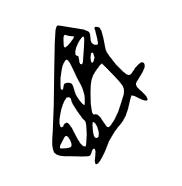
Character evolution:
| Oracle bone | Bronze | Seal script | Clerical script | Regular script | Simplified |
|---|---|---|---|---|---|
 |
谢 | 谢 | 谢 | 谢 | 谢 |
Vocabulary:
- 谢谢 : thank you